As someone who often gets mistaken for being Japanese (I’m from Hong Kong…), I must admit, I do take offense a little when people say that they made their initial judgement because I dress like a Japanese person. What exactly does this mean? Does this imply that there is a ‘uniform identifiable’ style that is immediately recognisable as ‘Japanese’. It’s certainly not a reference to national/traditional dress as I’m not out and about in kimonos and obi’s. What people are referring to when they make that assumption about me is based on the images they have seen from popular tomes like Fruits and the ‘quintessentially crazy’ streetstyle images people have seen on the web, TV documentaries etc. Seeing as I’m not from Japan, of course I’m no expert on the style complexities of the people there but I’m pretty sure the style there is not at all uniform and that it’s a big misconception that Harajuku girls decked in plastic fantastic accessories and white legwarmers are running riot on the streets of Tokyo. Yeah yeah, Susie, point out the obvious why don’t you. You laugh now but the number of times I overhear people commenting openly (under the impresison that I don’t understand English…) ‘Yeah, they ALL dress like THAT in Japan’ is disturbing to say the least.
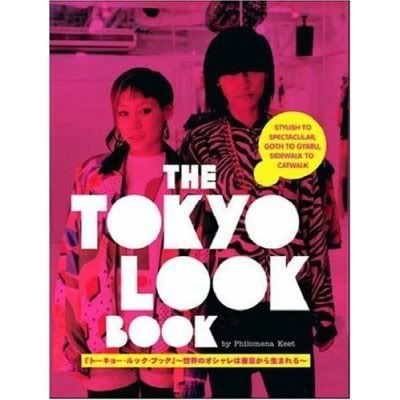
Therefore, I was rather pleased to see a new book that presents a more rounded and fair picture of Tokyo streetstyle. The Tokyo Look Book (teaser reader here)covers the ‘stylish to spectacular, goth to gyaru, sidewalk to catwalk’ and in a book combining streetstyle photos and informative ‘style tribe’ analysis, we get a much more indepth picture of Japanese style that goes beyond the misconceptions. Written by Philomena Keet, from London, who did her Phd on Tokyo street fashion (so THAT’S what I should have done after coming out of uni without a clue what to do…) she has constructed five broad chapters that cover the loose strands of style she observed in Tokyo. Each chapter covers the ins and outs of that style, what the wearers of that tribe do, their cultural habits, where they shop and an introduction to designers and brands associated with that particular style.
1) Shibuya Girls & Guys, 2) Spectacular + Subcultural (AKA what has promulagted Tokyo’s reputation for ‘crazy’ dressers…), 3) Youth Street Fashion, 4) The Stylish Femme, 5) Young Men at Work
So begins all the terminology that gets thrown about in each chapters that quickly makes me realise that whilst we have our own set of style classifications (indie, chav, nu-rave etc…), so too do Tokyo.
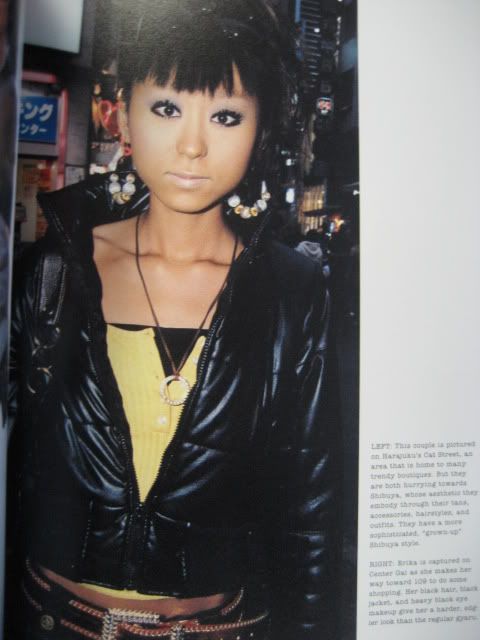
1) Shibuya Girls & Guys – Shibuya is an area I would liken to Camden in London or Mongkok in Hong Kong. It’s teenybopper land with fast and cheap fashion where gaggles of people hang around forming a hub, most notably around the Shibuya 109 centre, a shopping mall that Keet delves into quite a bit. Key words being..
‘Gyaru’ is a popular style, described as ‘fun-loving, mini skirt-wearing, tennyboppers’.
Loosely related to that umbrella term you then have ‘yamamaba’ or ‘mamba’ (this hilariously means…mountain hag!) who have an obsessive penchant for dark tanning, fluro/white make-up and brightly coloured hair. Then you have ‘hime-kei’ who likes to wear a lot of Disney princess-esque clothes. ‘Joshi kosei’ are high school gyaru with a thing for monogrammed wallets, cute sparkly phone accessories and short short skirts with those infamous white loose socks.




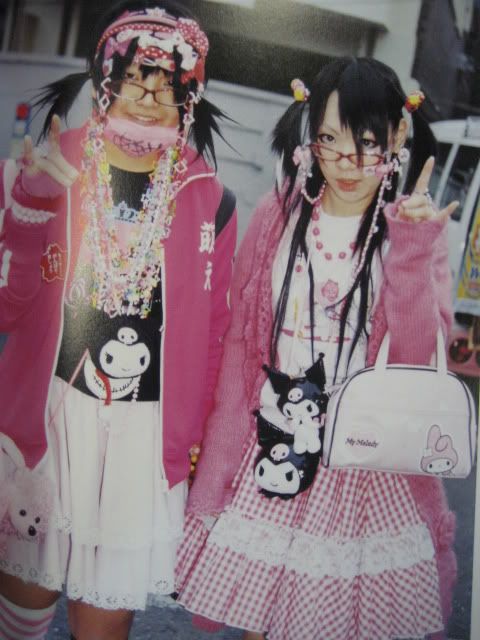
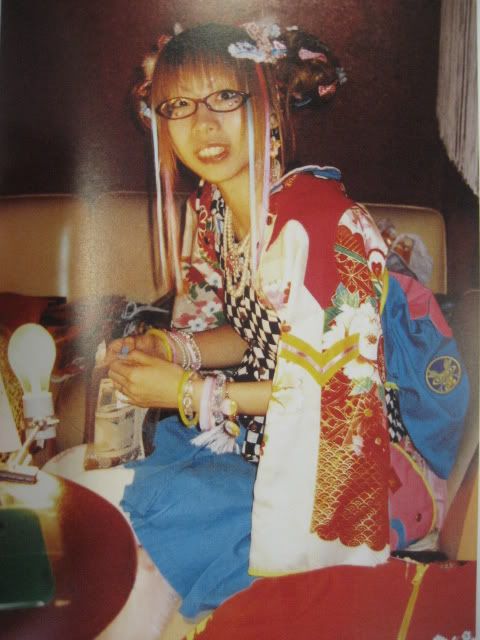
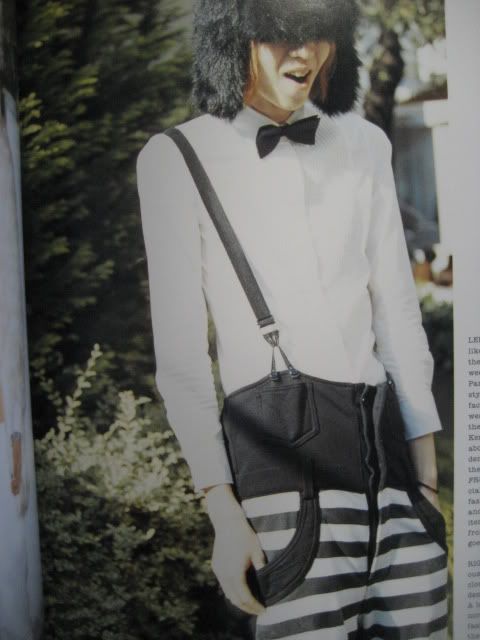
2) Spectacular + Subcultural – Keet raises a good point that the costume styles illustrated in this chapter aren’t seen everyday and for the people who wear them, it may not even be what they wear everyday but it’s more like a ‘Sunday best’ sort of style. More lingo…visual-kei meaning visual style that is inspired by J-rock music identified by spiked/dyed hair, piercings, coloured contact lenses. But then under visual-kei you get a plethora of sub-styles – Lolita, punk, goth and ‘decora-kei’ (decoration style). Even a term like Lolita is loaded with variations. Another form of one-off outfits worn not as a style but as a costume is the otaku who dresses normally 9-5 but goes out cos-playing when they can. Keet also points out that whilst they ‘look’ outlandish, there are still confines within the genre of costume they choose to don. I would say this is a fair assessment, not just with the ‘subcultures’ of Tokyo but in other cities too.


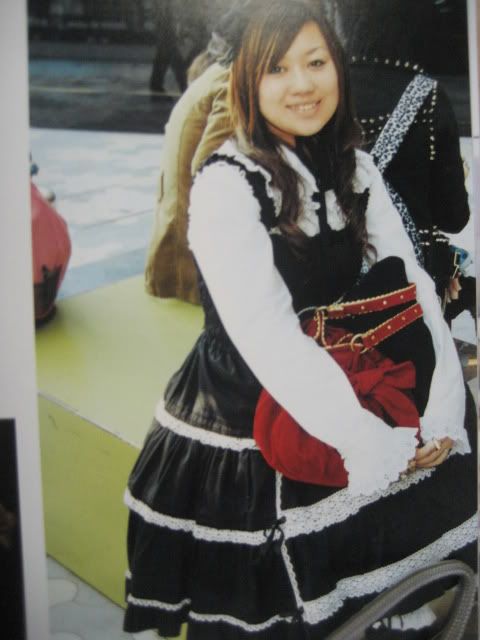
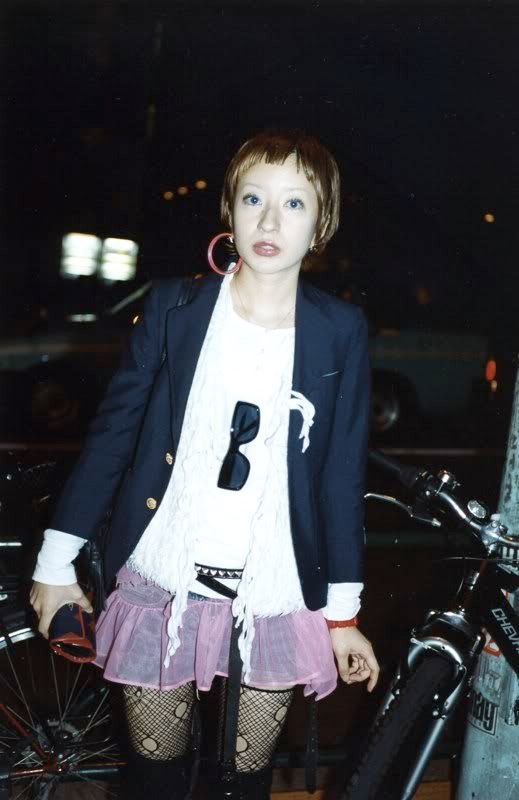
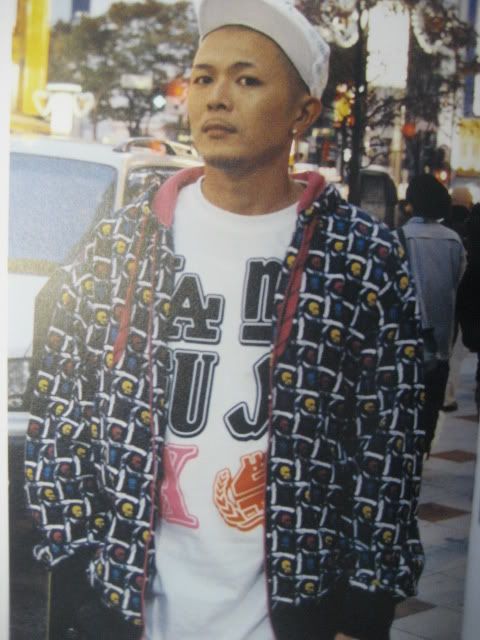
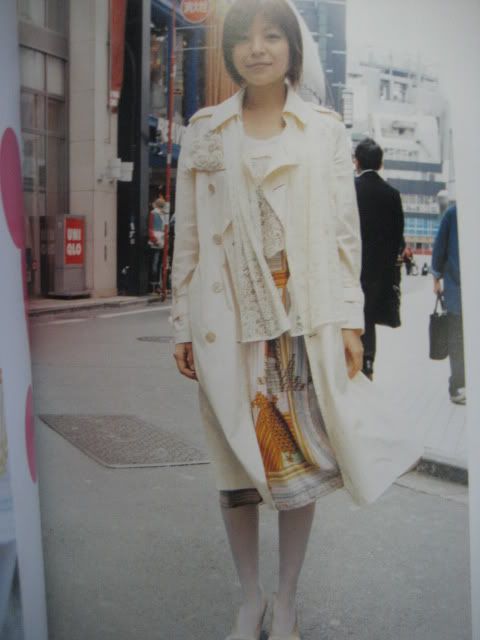
3) Youth Street Fashion – We then get to the nitty gritty of Tokyo style, the hardcore fashion lovers who are concerned with the changing nature of fashion. The chapter probably covers the biggest breadth of people as they’re basically the sort of people who you can’t box in, who have individuality/flair and are also ever-changing – as every city, not just Tokyo, will have. It’s funny how people would say that my style is very ‘Japanese-influenced’ when I don’t particularly relate to anything I see in this chapter because everyone looks SO different. Trends spawned in the backstreets of Harajuku are due to the varying nature of shops there – vintage, small avant-garde brands, mainstream etc. The word ‘ura-hara-kei’ (backstreet Harajuku style) has now come to mean a style that pays a lot of attention to ‘mode’ – the international avant-garde and also the smaller Harajuku-based brands. The photos seem to display such a wide plethora that giving ‘mode-kei’ it’s own chapter seems a little forced but I would probably say this is more my cup of tea style-wise.
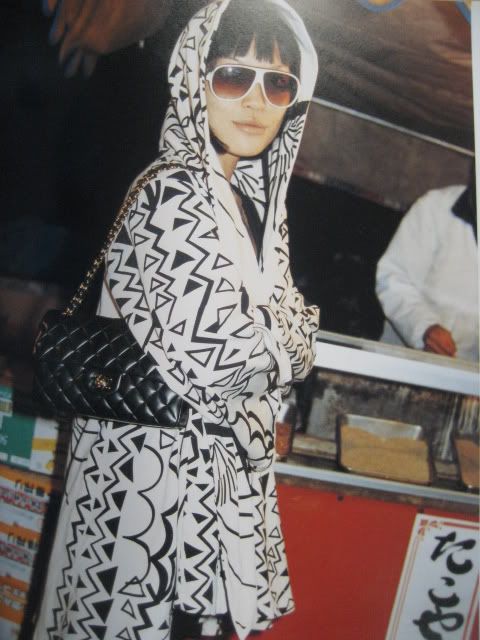


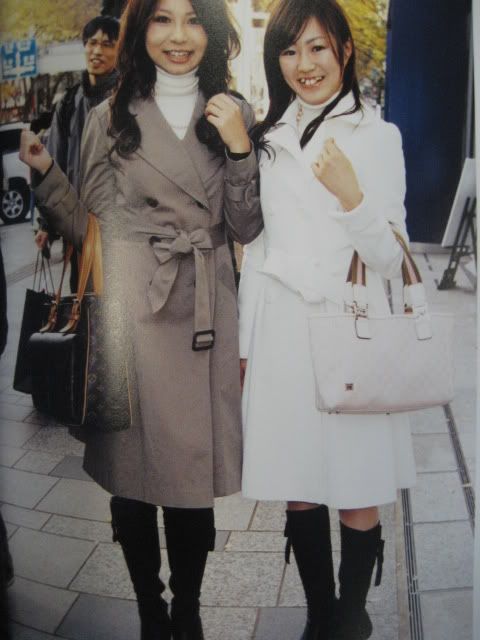
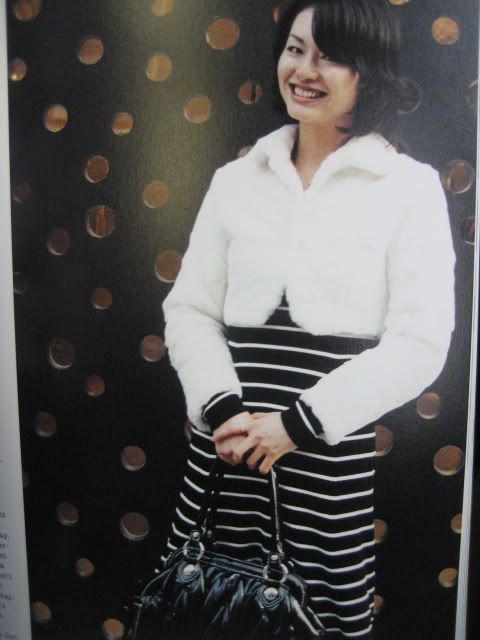
4) The Stylish Femme – Just as we have our well-to-do Sloanes, Tokyo has their well-to-do OL or ‘office lady’ who work in clerical positions in offices, living at home in order to fund their appearances, or ‘onesan-kei’ (older sister-style) who are mature, grown up versions of the Shibuya fash-scene. This style would be what I would call the mainstream fashion style in Japan, certainly from what I saw. A designer bag hooked on the arm with a pristine brunette coiffure and neat/conservative/mininmalist clothing.
5) Young Men at Work – This chapter again serves to demonstrate diversity amongst men’s fashion in Tokyo but also a familiar mundaneness about the suited and booted people who exist all around the world. The emphasis is on dressing for various jobs whether you’re a construction worker, in creative areas or work for a finance company.
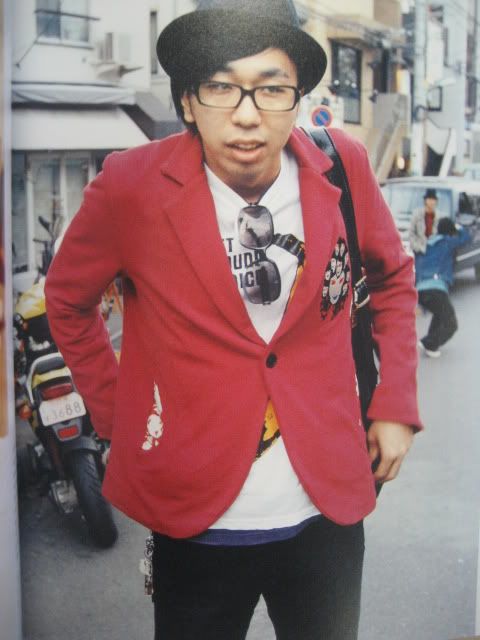
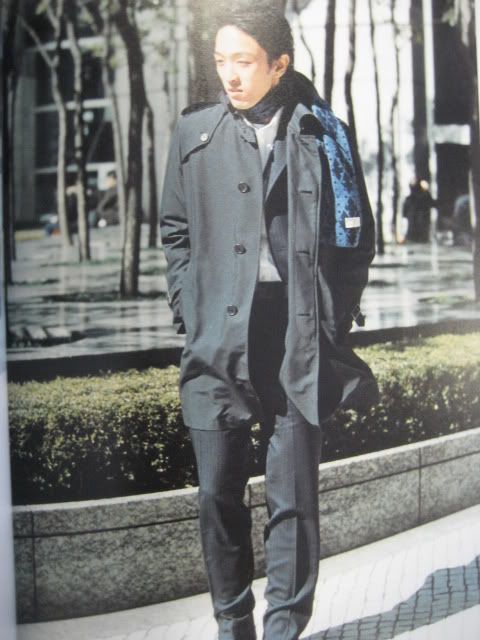
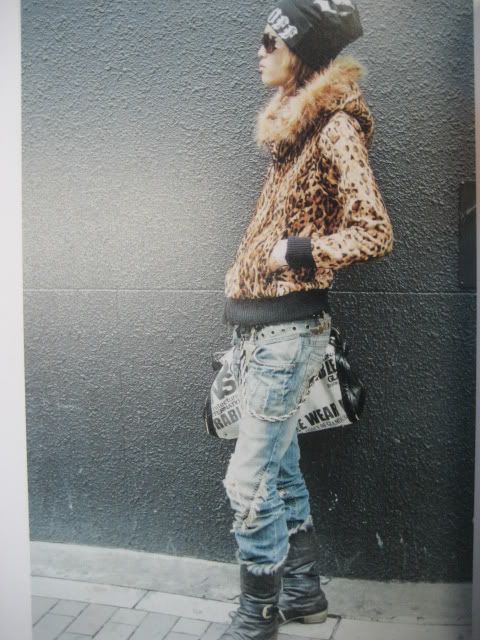
The main thing that strikes me is that the author seeks to demonstrate individuality. Unlike in magazines like Fruits, Street or Tune where you barely have a caption, alongside the photos in this book, you get given background info on that person, their likes/dislikes, where they hang out, even the way they interacted with the photographer so that the subjects aren’t just mere fashion plates but represented as people with different lifestyles, opinions and of course, style.
My only criticism would be that as Keet is approaching this subject from an anthropological perspective, the way she disects a person’s style can seem a little cold and very matter-of-fact. THis is probably necessary when dealing with a subject so complex and as detailed as the book is, there will probably still be people grumbling that there are vague generalisiations and fallacies in the book.
Long review over. If you were smart enough to skip my tedious natter, the short of it is that it’s a photo book with lots of indepth oomph and explanation for Tokyo streetstyle admirers.
Well. I think I do understand what people mean by saying you dress “japanese style”. It’s the bravery and the creativity and the individuality of your style – all things that you find especially in Japan. I assume that’s what they try to express, and to do so, the Japanese style is the best to compare it with, to explain your style. (Excuse my French)
ahhh another book to add to my sadly extensive list which i will never start to purchase- who wants to spend ¬£45 on a marketing text book?! anyway, i agree with saskia, it’s the expression and creativity that’s shown all over the tokyo pics in your style! i have a question: if this is standard japanese styles, what are the standard chinese, or mainly hong kong, styles? i can spend my 3rd year studying in hong kong and since seeing an amazing presentation from girls who went last year it’s really attracting me…
Ok, point taken about expression and creativity (I’m not really offended…more baffled…) but I do think those same qualities aren’t isolated to Japan and if you really look at the majority of people’s style, there is a great deal of conformist attitudes.
Selina: That sounds so exciting – I say go for it (not biased of course…)! I will email you to give you more detailed info…
my mum (whos from hong kong herself) reckons the japanese have this edgier, scruffy (not as in dirty but very layered and as if its all very laid-back) look with a lot of different shapes etc whereas with chinese girls theres a lot more practicality and comfort.. wearing say trainers with an outfit. at least thats always been her opinion.
i got mistaken for being japanese once by a japanese man. he said it was because ‘you dress like one and have an ipod’ which was a bit mind boggling.
I L-O-V-E Japanese fashion, especially street fashion and trends. The crazy thing is that all these trends come to america in a few years… get ahead of the trends with this book!
I just spent a semester in Japan and I can affirm they do not all dress the same, there are as many styles over there as anywhere else. What I think they do all have in common, is that they all dress well. Everyone seems to care about style, or are just instinctively gifted with a sense of style.
I wouldn’t be too offended about the comment that you “dress Japanese”. I’d take it as a compliment. I have to say that the Japanese girls here in London have, more often than not, the most individual styles that somehow with all the odd pieces they put together it looks completely fab and polished. I saw a girl just today that was wearing a tie-dye dress, big beaded necklace, cowboy boots, hand-tooled leather bag, and a 40’s-esque felt hat. These are not things I would put together, but on her they looked so amazing. I’m a fashion student, so I see my classmates wearing interesting outfits all the time (whereas I am barely “trendy” – don’t want to be – and usually just can’t be bothered to primp they way they must do), but they are usually so boring and Top Shoppy. So God bless the Japanese!
I may also say that most people I have met from eastern Asia (Hong Kong included) are some of the nicest people ever. And I usually do want their clothes, which they nearly always bought in Hong Kong or Japan. It’s not fair! 🙂
the author is actually coming to my school next week to talk about it.
i’m from tokyo and i’d always thought you dress like a true londoner!!
here are some websites with fresh pics from tokyo fashion in the streets. sorry if you knew about them already.
http://www.japanesestreets.com/
http://www.style-arena.jp/index_e.htm
I love how you dress! I would take it as a compliment. I agree with the first person who commented. It just always seems that the Japanese are willing to take risks and wear different colors or combos of clothes. And you do take risks with your outfits. I like to wear bright colors too (purple tights being one of my favorites) and people say it is “very Japanese” of me all the time. So, I understand you pain. :p
The cover photo is of my friends Yulia and Bizzare who dj’d at my wedding in Shibuya, Tokyo. I lived there for a year and got to meet everyone who is in Fruits and Tune (its all the same people, the photos are all set up, its done on Tuesdays around Harajuku) I would say I dress very Japanese, but becasue I’m not asian people just think I’m crazy. In Tokyo I stood out with my blonde hair and crazy clothes and would get my photo taken by someone at least once a day. I really miss all my friends there, not only are they fashionable but they are fun and throw the best parties and sleep overs ever! I’m moving back for good soon, after living in Tokyo you just cant live anywhere else, nothing compares!
i get it all the time too, susie bubble. i think it’s just because people assume that if your style is crazy you must be from tokyo. 😐
(i’m also from hong kong)
I am Korean-American and I agree with Susie that there is a tendency for Westerners to think–look at those wacky and interesting Japanese dressers!
Japanese people are not all wacky Harajuku girls! That thinking drives me nuts because it is a stereotype,and even “positive” stereotypes are hurtful and do not advance our understanding of each of ourselves as individuals, even if the indiviudals share ethnicity.
When I visit Tokyo, I think that there are fewer people dressed in the crazy costumes a
I’m living in Hong Kong now and I have to say I find it not as inspiring the way people dress here compared to Tokyo and London… It’s very much about blending in and not standing out. I’d say HKG style is more like dressing in Paris or Milan where there’re specific codes (One can always spot “Le Chic Parisien” or that unique flair of a Milanese). Due to the constant heat and humidity in HKG, people tend to dress with less layering and it’s harder to make it very interesting. Decoration to an outfit seems to be limited to small jewellery.
i get people telling me quite often that i would fit in really well in japan because i dress like the japanese. it would be a compliment if they were actually giving me props for my creativity or my individuality but what they mean to say is that they think my choice of colours/ patterns/ shoes, etc are too weird for them. not only do i find their comments stereotypical (of the japanese) but also slightly narrow-minded to what are acceptable styles.
I don’t dress in a Japanese style although it is rather popular among teenage girls in Malaysia. Personally it wouldn’t suit me one bit… But I don’t have anything against the style. To me it looks a little ghotic but with an added personal touch, and there’s nothing wrong with that. Probably takes more initiative to mix and match various colours too.
i once ran around without my walkman on and overheard a boy saying, “well, see, that’s how the girls dress in Japan!”. I think this is mostly because i am asian and have a not German style.. which stands out a bit… i laughed silently but it’s very stereotypical because neither am i japanese, nor is my style “japanese”,w hatever that means..
but to get to your post, i think it’s because u too are asian and dress outstanding which most people don’t know what to make of it.
oh and thanks for the book recommendation, i am studying japanese science and love japan styles, this is def a book for me.
Great book recommendation post, thanks for breaking it all down :)! Will have to check it out…
Hi there Susie, I’ve been living in Japan for 7 years now and I do have to agree w/ you – the stylish femmes are the mainstream fashion style here.
i too often get mixed up with being japanese though im chinese.
i read some of the posts up there and of course not all japanese dress wacky or ‘fruits’ (the magazine). but when you think about japanese streetstyle, ‘fruits’ style is really what made their streetstyle famous. it’s like thinking all parisian girls are tres chic! or all milano ladies are glamourous sexy.
i do have to say that japan was the first country in asia that set a “standard” in streetstyle or even asian style in general. so alot of the other countries tend to follow and break down elements of japanese streetstyle into each countries’ own depending on the weather and the society there.
since i was born and often travels back to china, the southen part, from what i see, the style there is influenced by korean style lately, mainly the cutesy, pretty look or the boyish look of the ganji style due to the korean youth wave through books, music, film and tv drama.
anyways, im not THAT offended by mistaken for japanese since i was mixed for other nationalities as well, even a mix! but i would always make my true nationality which is chinese/canadian clear to those who care to know
I second jean and giselle.
I think a main misconception is that japanese teens are all ‘harajuku girls’ (or boys for that matter).. I agree with them there that ‘stylish femme’ is the mainstream style, even amongst younger people. MOst japanese girls I know would slot into this style.. It is only a small amount of people who go for the ‘spectacular subcultural’ style, and of those – only really on weekends..
From the people I know, these ‘subcultural’ dressers are seen as slightly weird.. and the yamamaba too, actually i was reading something in which this group is kind of outcast..
THis is kind of due to the fact that Japan is still quite a conservative society and I think this small group of people taking part in these sort of fashion movements is a reaction to that, which is admirable.. ( i dont like how i sound now.. but, anway..trying to show my point )
But to group them all together is not right, a lot of people dont want to identify with those groups, and saying that someone has a very japanese style because they dress in gothloli clothes (unless perhaps it comes from a japanese person) is kind of ignorant..
You wouldnt say that someone has English style because they dress in ‘nu rave’ ..
I Also think because of how all this info has been diffused, – well especially because of gwen stefani – everyone thinks they know about japanese fashion, and have an image of japanese girls as little kawaii doll-like,girly dressers – which is kind of .. i dont know – neo-orientalist..
NOt to say that i dont admire japanese fashion movements, it is this reaction to conservatism which produces innovation and individualism that I think attracts people. I like elements of different styles, but dont imitate something because it is Japanese and ‘cool’ – do it if you feel it. Or come up with your own individual style.
(this is directed at no particular person.. please dont attack me.. )
xo
of course what i wrote just then has no relation to the book, i still want to read it ..just the ‘japanese style’ kind of comments..
Fantastic site keep up the good work
Being that I dislike the books that have only photos and no background, this sounds right up my alley.
This is the right blog for anybody who wants to understand this topic.
You know a whole lot its almost tough to argue with you (not that I actually will need to…HaHa).
You certainly put a new spin on a subject that has been written about for many years.
Great stuff, just great!